By Palm Beach & Broward Mugshots
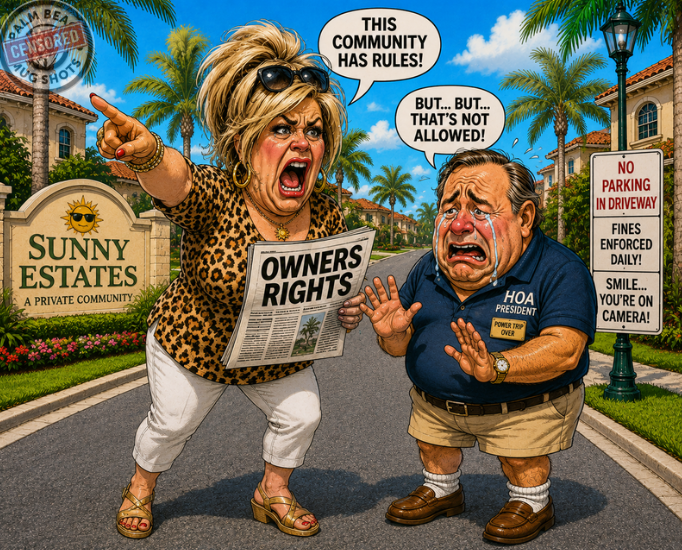
Millions of Floridians live in neighborhoods governed by Homeowners Associations (HOAs), and recent changes to Florida law continue to reshape how those associations operate.
The reforms, which are now fully in effect across the state, were designed to increase transparency, improve financial accountability, strengthen homeowner rights, and place greater oversight on HOA boards and management companies. For homeowners in Palm Beach County, Broward County, and throughout Florida, these changes could affect everything from parking rules to access to financial records.
HOAs Can No Longer Ban Many Vehicles From Driveways
One of the most popular changes among homeowners involves parking restrictions.
Florida law now limits an HOA’s ability to prohibit residents from parking:
- Personal vehicles
- Pickup trucks
- Certain work vehicles
- First responder vehicles in some circumstances
Many homeowners had complained that associations were issuing fines over vehicles parked in their own driveways. The law significantly restricts those enforcement powers.
HOA Boards Must Complete Mandatory Training
One of the biggest changes requires HOA board members to undergo formal education and training.
Newly elected or appointed directors must complete a state-approved educational course within 90 days of taking office. Continuing education requirements also apply to many board members.
Lawmakers said the goal is to ensure board members understand Florida law, financial responsibilities, record keeping requirements, and ethical obligations before making decisions that affect homeowners.
Fining and Enforcement Restrictions
The reforms place additional limits on HOA enforcement powers.
Among the changes:
- Greater due process requirements before fines are imposed
- Independent hearing procedures
- Restrictions on selective enforcement
- More protections for homeowners challenging violations
The legislation was designed to reduce complaints about excessive or inconsistent enforcement action
Homeowners Have Greater Access to HOA Records
Florida lawmakers expanded homeowners’ rights to inspect official HOA records.
Associations must maintain records for extended periods and provide access to many documents upon request. Failure to provide records can expose associations and board members to significant penalties.
The law was designed to address complaints from homeowners who claimed boards were withholding information regarding finances, contracts, violations, and association business.
Criminal Penalties for HOA Fraud and Record Concealment
Perhaps the most significant change involves accountability.
Florida law now creates criminal penalties for certain misconduct involving HOA operations, including:
- Destroying financial records
- Concealing official records
- Refusing lawful access to records
- Accepting kickbacks
- Fraudulent voting activities
- Intentionally misleading homeowners regarding association finances
Board members accused of certain criminal acts can be removed from office while charges are pending.
New Website Requirements for Larger HOAs
Associations with 100 or more parcels must maintain a website or mobile-accessible portal containing important documents.
These websites must provide access to items such as:
- Governing documents
- Meeting notices
- Financial information
- Rules and regulations
- Other official association records
The goal is to allow homeowners easier access to information without having to make repeated requests.
Stronger Financial Reporting Requirements
Florida now requires greater financial transparency from associations.
Depending on the size of the HOA and annual revenue, associations may be required to produce:
- Financial reports
- Compiled statements
- Reviewed statements
- Full independent audits
Associations with 1,000 or more parcels must provide audited financial statements regardless of revenue levels.
Lawmakers said the requirements are intended to reduce financial mismanagement and increase homeowner confidence in how association dues are spent.
HOA Debit Cards Are Largely Prohibited
Another significant reform targets association spending.
HOAs are now prohibited from using debit cards for many association expenses.
Supporters argued that debit cards created opportunities for abuse because transactions were harder to monitor than traditional financial controls.
Violations involving association funds can now result in serious legal consequences.
Protection for Hurricane Preparedness Improvements
Florida lawmakers also addressed disputes involving hurricane protection.
HOAs must adopt standards regarding approved hurricane protection measures and generally cannot reject improvements that comply with those standards and applicable building codes.
The law was intended to prevent associations from blocking homeowners from installing storm protection based solely on aesthetics.
Community Association Managers Face New Requirements
Community Association Managers (CAMs) also face increased oversight.
Managers must now meet additional education requirements and provide homeowners with:
- Contact information
- Availability schedules
- Certain contract information upon request
The changes are intended to improve transparency between residents and the companies hired to manage HOA operations.
Did Florida Eliminate HOAs?
No.
A proposal that would have made it easier for homeowners to dissolve certain HOAs received significant attention during the 2026 legislative session. However, that proposal did not become law.
As a result, Florida HOAs remain fully operational under existing state statutes and governing documents.
Bottom Line for Florida Homeowners
The HOA reforms represent some of the most significant changes to Florida homeowners association laws in decades.
Supporters say the changes increase transparency, reduce abuses of power, improve financial accountability, and provide stronger protections for homeowners. Critics argue some provisions may make it more difficult for associations to enforce community standards.
For residents of Palm Beach County, Broward County, and communities across Florida, understanding these changes may be important when dealing with parking disputes, fines, architectural approvals, financial records requests, or HOA governance issues.
Residents with questions about specific disputes should consult a qualified Florida attorney familiar with homeowners association law.
Comments are moderated. Text only. No photos, videos, links, addresses, phone numbers, victim information, witness names, threats, harassment, racial slurs, or unverified accusations. All individuals are presumed innocent unless proven guilty in a court of law. Your email must be verified before your comment can be reviewed. For safety and moderation, comment submissions may include your name, email, IP address, browser/device information, and comment activity.